
Why Most Runners Plateau (And the Simple Shift That Actually Fixes It)


You’re consistent. You’re putting in the miles. You’re doing what you think you’re supposed to do. But your pace isn’t improving, runs don’t feel any easier, and mentally it starts to wear on you a bit.
If you’ve been running for a while, you’ve probably hit a stretch where nothing seems to move. I’ve been there more than once.
What I’ve learned is this—plateaus aren’t random. They usually show up when your training looks consistent on the surface, but isn’t actually giving your body a reason to adapt anymore.
The frustrating part is you often feel like you’re working hard. But working hard and progressing aren’t always the same thing.
The Plateau Isn’t a Problem—It’s Feedback
Most runners see a plateau as something going wrong. I’ve started to look at it differently.
It’s feedback.
Your body is basically saying:
“I’ve adapted to what you’re doing. This is normal now.”
And when everything becomes “normal,” progress stops.
A lot of runners fall into a rhythm like this:
- Same distance most days
- Same pace most days
- Same effort most days
- Same routes, same mindset
It feels productive because it’s consistent—and consistency is good—but without variation or intention, you’re just maintaining your current fitness.
There’s nothing wrong with that… unless you’re expecting improvement.

The “Middle Pace” Trap (Where Most People Get Stuck)
This is the biggest issue I see, and honestly, the one that held me back the longest.
Most runners live in the middle.
Not easy. Not hard. Just kind of… steady.
- You’re pushing enough to feel it
- You’re finishing tired
- But you’re not actually improving much
Every run turns into a moderate effort. It feels like work, so it feels productive—but it’s not targeted.
What’s happening is:
- Your easy runs are too hard to recover properly
- Your hard runs aren’t hard enough to drive adaptation
So you end up in this constant gray zone. Always working, rarely improving.
The Shift That Changed Everything for Me
The biggest breakthrough for me wasn’t running more—it was running easier.
And I mean actually easier.
Slower pace. Lower effort. Controlled breathing. Runs where I could think clearly instead of just getting through it.
At first, it messes with you a little:
- You feel like you’re going too slow
- You wonder if it’s even helping
- Your ego might not love it
But this is where the foundation gets built.
Easy running does a few things:
- Builds aerobic capacity
- Improves endurance
- Allows you to recover between harder efforts
- Keeps you consistent without burning out
It’s not flashy, but it’s what everything else is built on.

Why Easy Running Works (Even If It Feels Too Easy)
Your body doesn’t get stronger during the run—it gets stronger after, when it recovers and adapts.
If every run is moderately hard:
- You’re always slightly fatigued
- Recovery is incomplete
- Adaptation is limited
When you run easy:
- You reduce overall stress
- You give your body space to adapt
- You can handle more volume over time
That’s where real progress comes from—not from crushing every run, but from stacking consistent, sustainable effort.
Then Add Intensity—With Purpose
Once most of your running is actually easy, that’s when you layer in effort.
This is where a lot of people flip it—they go hard all the time instead of saving it for when it matters.
You don’t need a ton of intensity. You just need it to be intentional.
- One harder session per week is enough to start
- Intervals, tempo runs, or short pickups
- Something that challenges you without completely draining you
Now your training has contrast:
- Easy days = recovery and base building
- Hard days = stimulus for growth
That combination is what breaks plateaus.
What Progress Starts to Look Like
When you get this balance right, progress doesn’t always show up the way you expect.
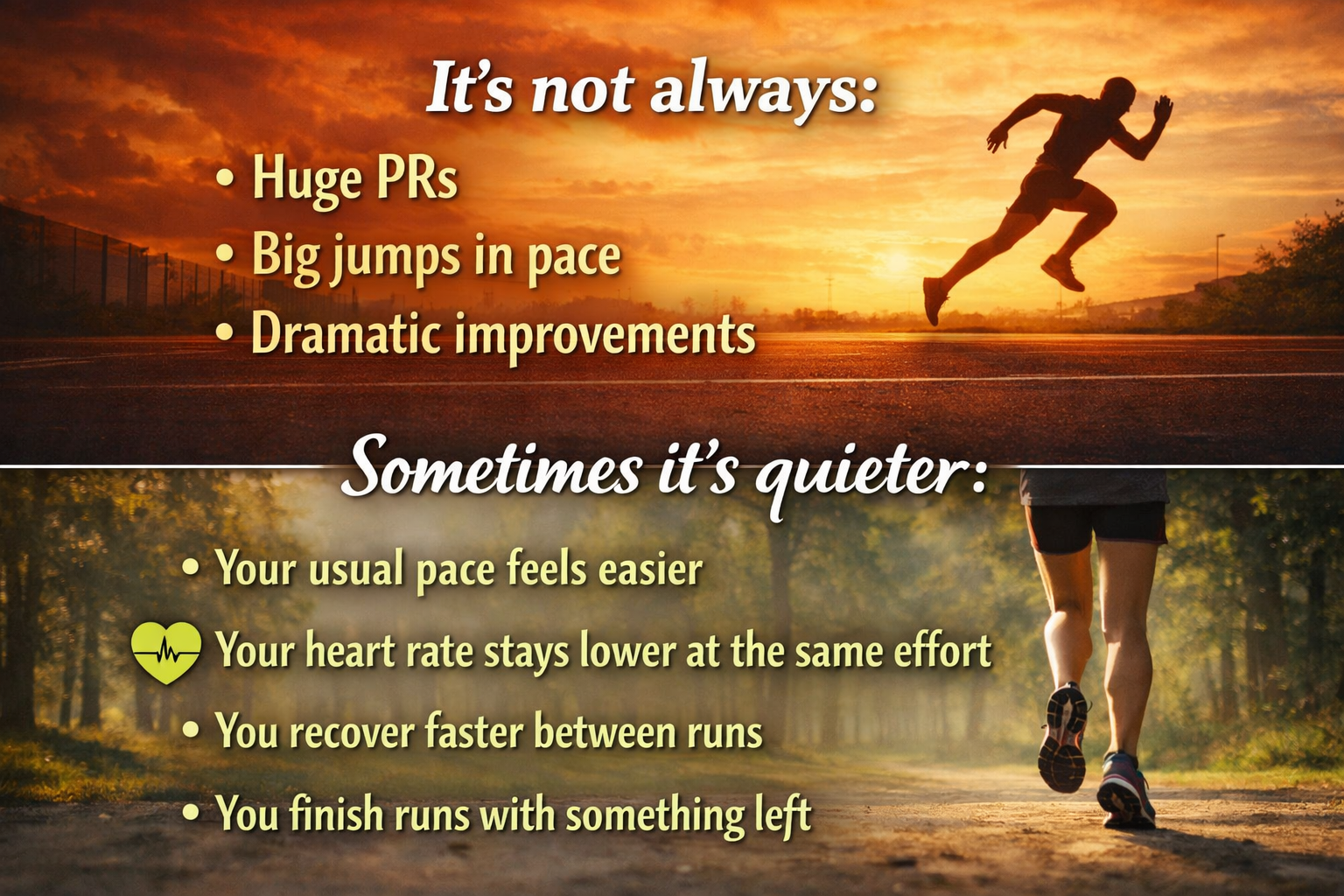
It’s not always:
- Huge PRs
- Big jumps in pace
- Dramatic improvements
Sometimes it’s quieter:
- Your usual pace feels easier
- Your heart rate stays lower at the same effort
- You recover faster between runs
- You finish runs with something left
Those are signs your system is improving—even if the numbers haven’t caught up yet.
The Mental Side of Plateaus
This is the part that doesn’t get talked about enough.
Plateaus mess with your head.
You start questioning:
- “Am I doing something wrong?”
- “Why am I not improving?”
- “Is this even working?”
I’ve had those thoughts more than I’d like to admit.
But most of the time, it’s not about doing more—it’s about doing things differently.
Slowing down can feel counterintuitive, but it often unlocks progress faster than pushing harder ever did.

What I’d Do If I Hit a Plateau Today
I wouldn’t overhaul everything. I’d simplify and reset.
- Slow most of my runs down (more than I think I need to)
- Keep my weekly mileage steady
- Add one intentional harder session
- Focus on how I feel, not just numbers
- Give it a few weeks before judging anything
That’s it.
No complicated plan. Just better balance and a little patience.
Final Thought
Plateaus aren’t the end of progress—they’re usually the point where you need to adjust.
For me, the shift wasn’t doing more miles or pushing harder every day. It was learning when to hold back and when to push.
Run easy when it’s time to run easy.
Push when it actually matters.
That balance is where progress starts again—and where running becomes something you can actually sustain long term.