Altra Olympus 7 Review: The Big, Cushioned Trail Shoe Built for Long Miles

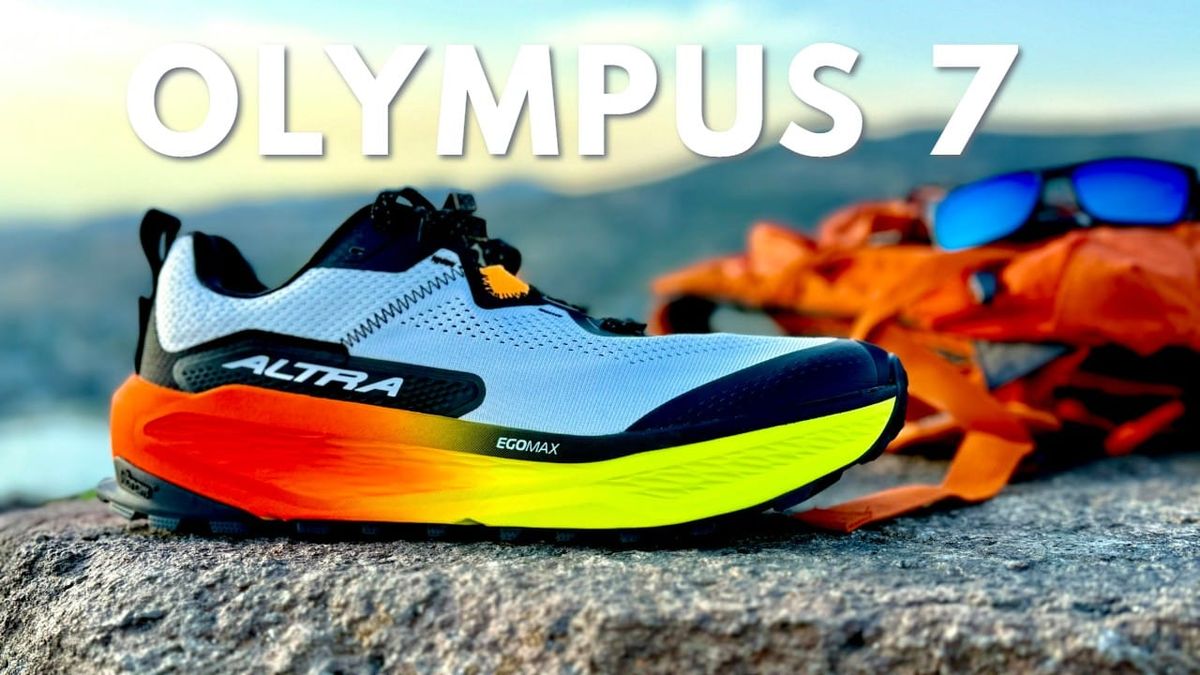
If you’ve spent any amount of time looking at trail running shoes, you’ve probably noticed that there are approximately 47,000 options available.
Some are light. Some are fast. Some are aggressive. Some feel like you're running barefoot on a pile of rocks for "better ground feel." And then there’s the Altra Olympus 7.
CHECK IT OUT HERE (affiliate link): https://altrarunning.pxf.io/vDmzQ3
The Olympus 7 takes a very different approach.
It’s big. It’s cushioned. It’s comfortable. It has that unmistakable Altra zero-drop platform. And it looks like it was designed by someone who decided that maybe our feet have suffered enough.
I've been putting the Altra Olympus 7 through its paces on trails here in Utah, and after spending time running, hiking, climbing, descending, and generally making questionable decisions in the mountains, I’ve come away pretty impressed.
If your idea of a good trail shoe involves maximum cushioning, a roomy toe box, zero-drop geometry, and enough comfort to keep moving when your legs start filing formal complaints, the Olympus 7 deserves your attention.
What Is the Altra Olympus 7?
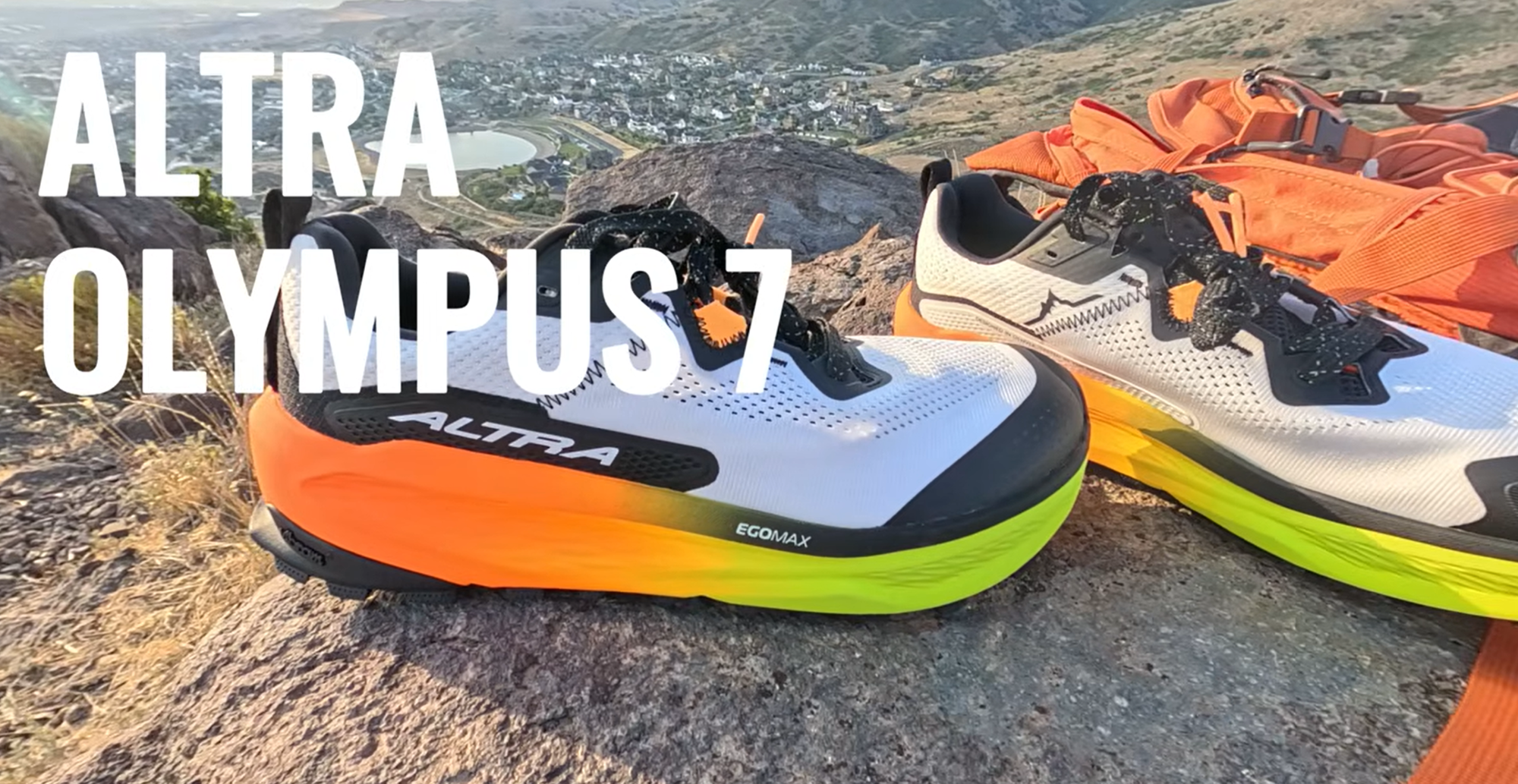
The Altra Olympus 7 is a highly cushioned trail running shoe designed for long-distance trail running, hiking, and extended time on your feet.
It sits at the more cushioned end of Altra's trail lineup, making it particularly appealing for runners who prioritize comfort over shaving every possible gram from their shoes.
And that's an important distinction.
This isn't the shoe I would immediately reach for if someone told me I needed to run a 5K as fast as humanly possible.
This is the shoe I want when someone says:
"Hey, let's go run for several hours."
Or:
"Let's hike up that mountain."
Or, perhaps most accurately:
"I have absolutely no idea how long this trail is going to take."
That's where the Olympus 7 starts to make a lot of sense.
First Impressions
The first thing you notice about the Olympus 7 is the cushioning.
There is a lot of it.
And I mean that in the best possible way.
The shoe has a substantial midsole that gives you a plush, protective feel without making the shoe feel completely disconnected from the trail.
The other thing you notice almost immediately is the shape.
Altra is known for its FootShape toe box, and the Olympus 7 continues that tradition. Instead of squeezing your toes together like they're all trying to fit into the same airplane seat, the shoe gives your toes room to spread out.
For trail runners who have dealt with cramped toes, hot spots, or feet that seem to expand after a few hours on the trail, this can be a huge advantage.
And if you're doing long-distance trail running, your feet are going to appreciate that extra room.
Because feet apparently don't enjoy being stuffed into tiny leather sausages for six hours.
Who knew?
Zero Drop: Love It or Learn It
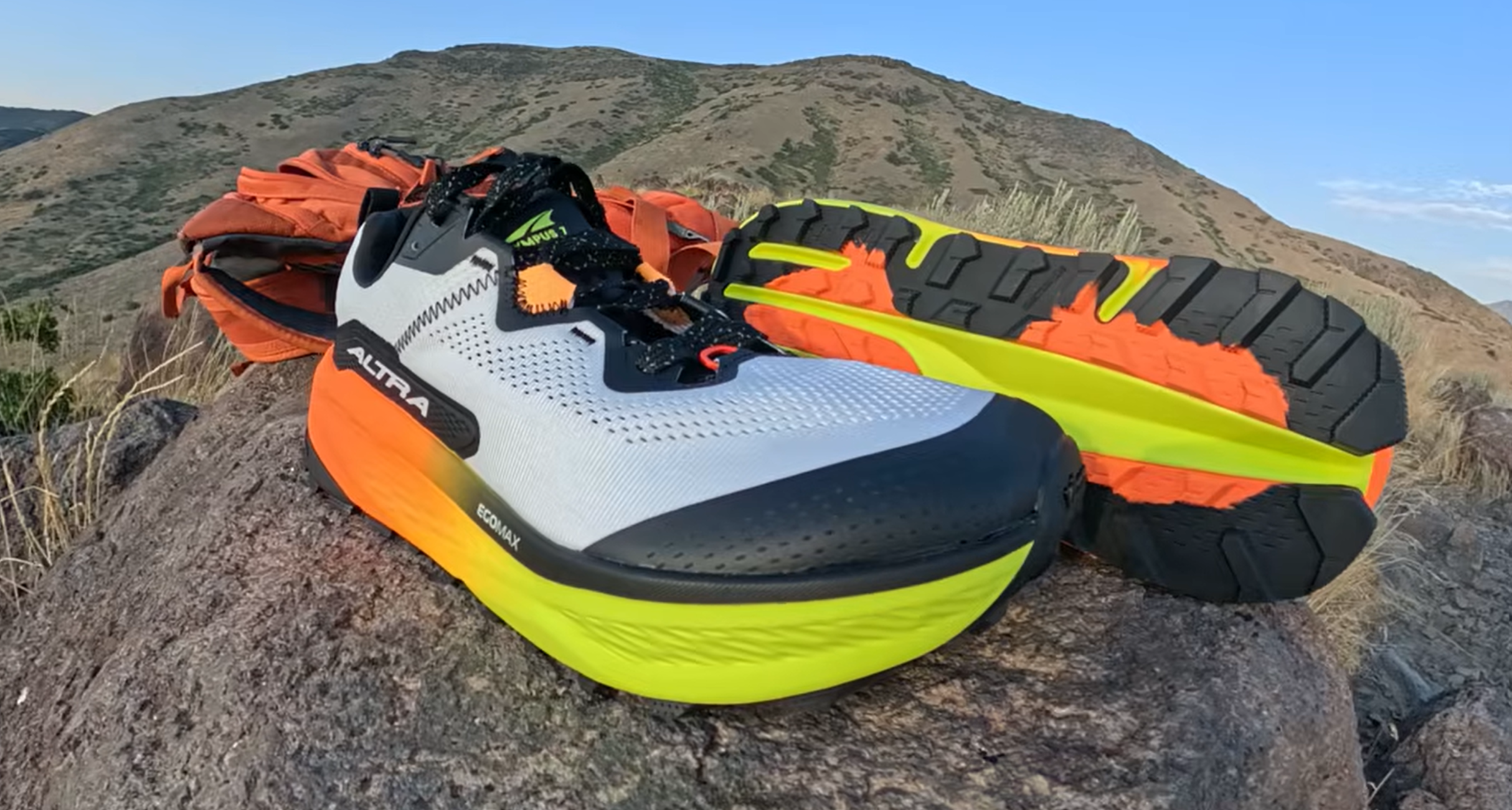
One of the defining characteristics of the Olympus 7 is Altra's zero-drop platform.
That means there is no traditional heel-to-toe drop in the shoe. Your heel and forefoot sit at essentially the same height relative to the ground.
If you're already accustomed to zero-drop shoes, this probably won't seem particularly unusual.
If you're coming from a traditional running shoe with a significant heel-to-toe drop, however, it can feel very different.
And that's something I would not ignore.
Zero-drop shoes can change how your feet, calves, Achilles tendons, and lower legs interact with the ground. If you're new to zero-drop footwear, don't immediately decide that you're going to run 20 miles in them because they feel comfortable in the living room.
Your calves may send you a strongly worded email.
Give yourself time to adapt.
For runners already accustomed to Altra shoes or zero-drop footwear, however, the Olympus 7 provides that familiar platform while adding a significant amount of cushioning underneath your feet.
The Cushioning
Let's talk about the thing that makes the Olympus 7 what it is.
Cushioning.
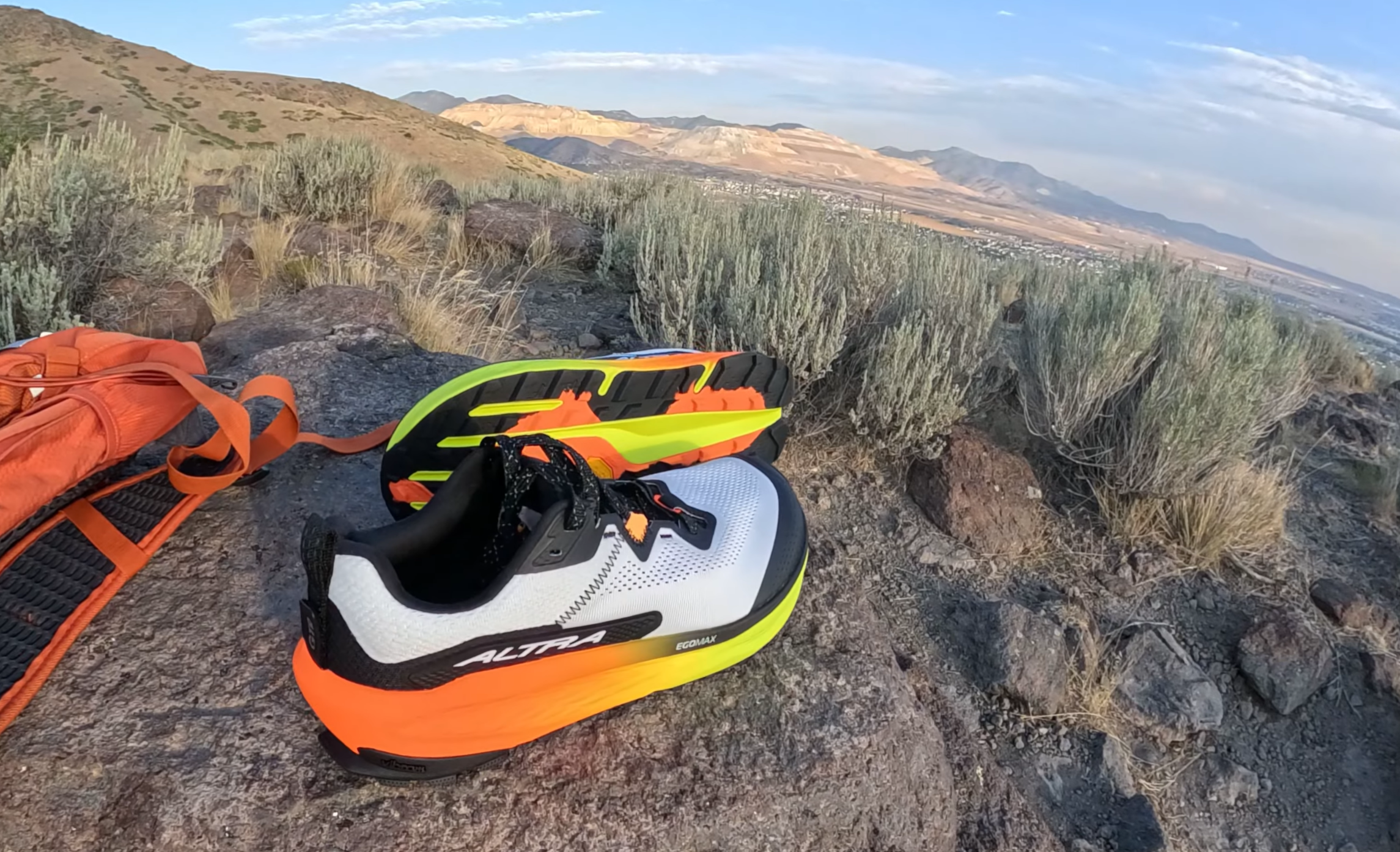
The Olympus 7 uses Altra's Vibram Megagrip outsole and a thick, cushioned midsole designed to provide comfort and protection over long distances.
And this is where the Olympus 7 really shines.
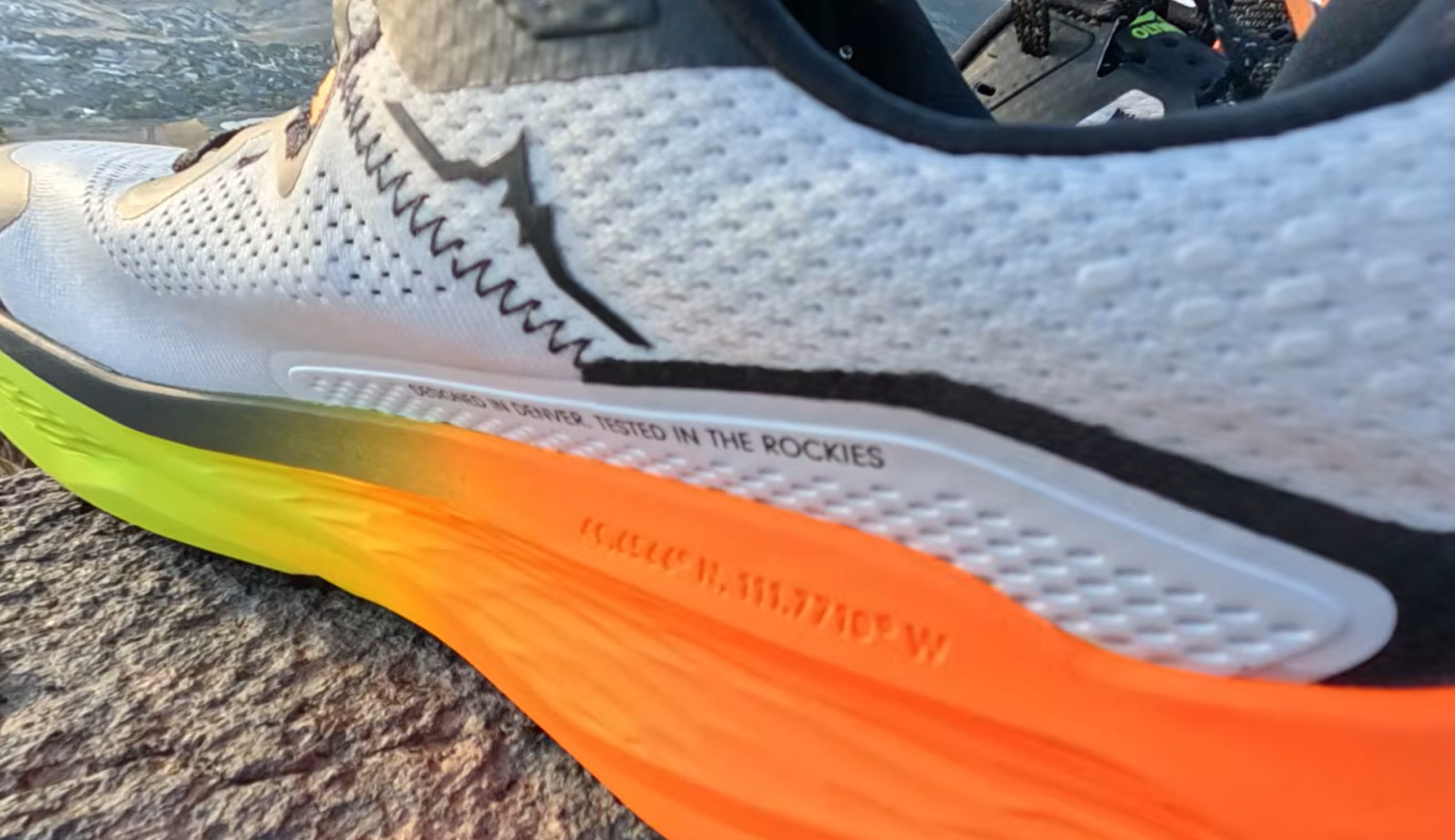
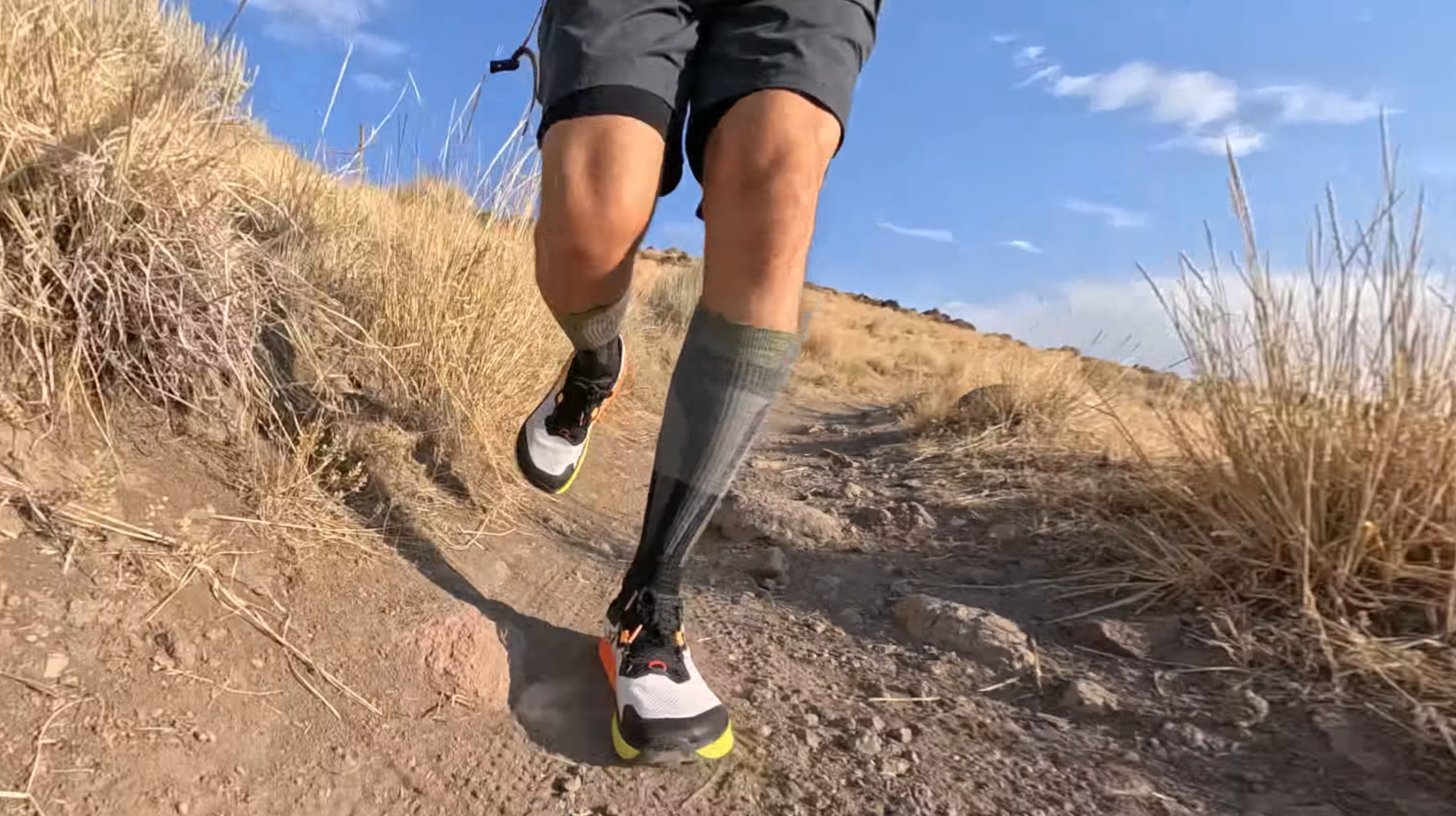
On rocky Utah trails, I appreciate having a substantial layer between my feet and the terrain.
There are trails around here where the rocks seem to have been specifically designed by a committee whose sole purpose was to make runners uncomfortable.
You get rocks.
Roots.
Loose dirt.
Sharp edges.
More rocks.
Then, just when you think the trail is finally going to smooth out, somebody apparently throws another pile of rocks directly in front of you.
The Olympus 7 handles that kind of terrain well.
The cushioning takes some of the sting out of repeated impacts and makes long stretches of rough trail much more manageable.
It's not just about running faster.
Sometimes it's about still having functional feet several hours later.
How Does the Olympus 7 Feel on the Trail?
The Olympus 7 has a very different personality from a lightweight, highly responsive trail racing shoe.
It's more relaxed.
More comfortable.
More "let's see where this trail goes."
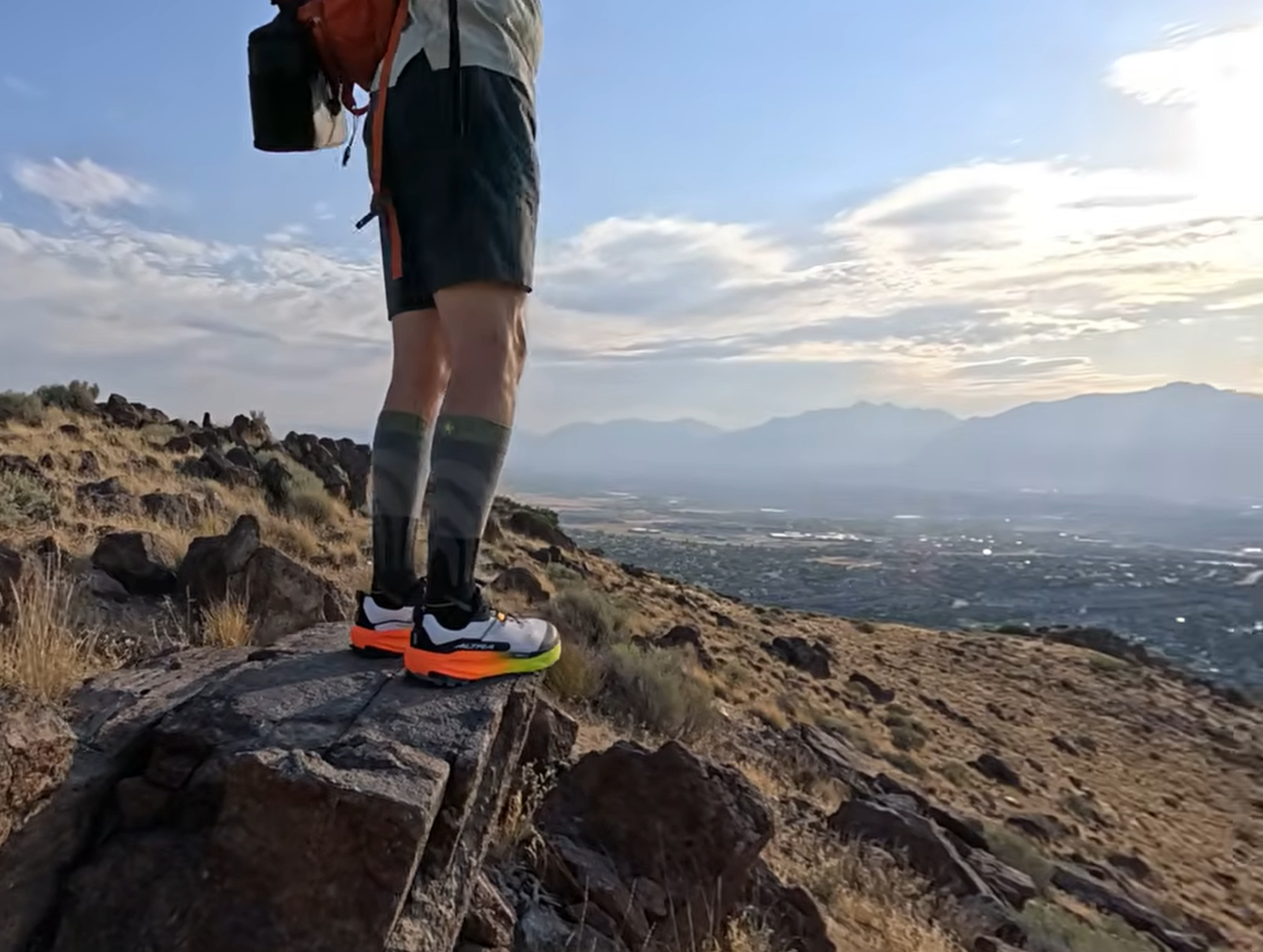
When you're cruising along a relatively smooth section of trail, the Olympus 7 feels comfortable and stable. It isn't trying to constantly remind you that you're wearing a performance racing shoe.
Instead, it gives you a nice, protective platform and lets you settle into your stride.
That makes it especially appealing for long trail runs and hikes where comfort becomes increasingly important as the miles pile up.
Because here's the thing about trail running:
At mile three, almost every shoe feels pretty good.
At mile fifteen, you start having philosophical conversations with your footwear.
"Why did I buy these?"
"Why am I doing this?"
"Who convinced me that running uphill for several hours was a good idea?"
That's when cushioning starts to matter.
Traction
The Olympus 7 uses a Vibram Megagrip outsole, which is one of the reasons I feel comfortable taking this shoe onto more technical terrain.
Grip is incredibly important for trail running.
You can have the most comfortable shoe in the world, but if you're sliding around every time the trail gets steep, things get exciting very quickly.
And not the good kind of exciting.
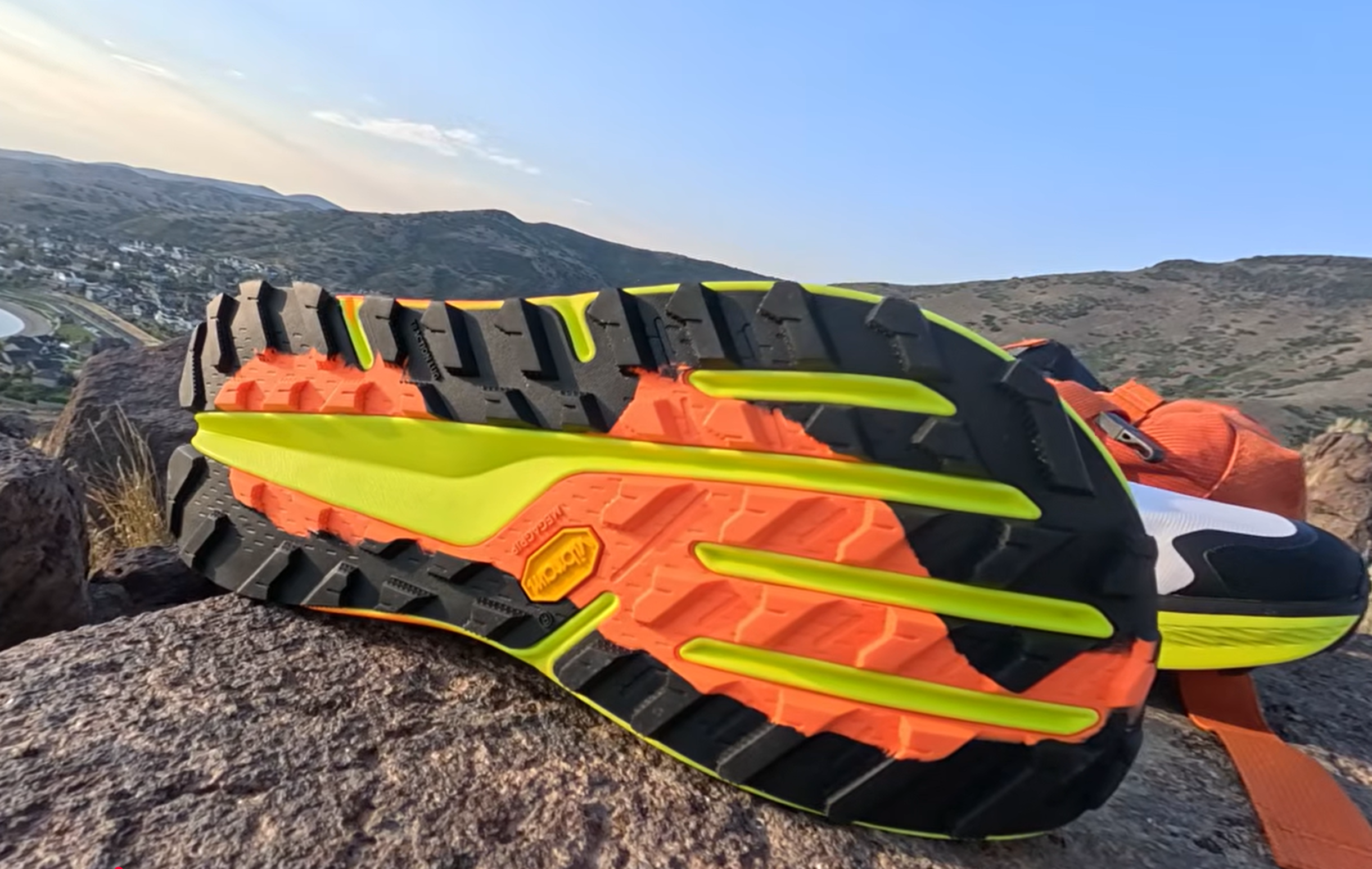
The Olympus 7 provides solid traction across a variety of trail surfaces, making it a versatile option for everything from packed dirt to rocky mountain trails.
I've particularly appreciated the outsole when dealing with uneven terrain and descents.
Because going uphill is hard.
Going downhill is where the trail starts asking questions about your decision-making.
Good traction gives you confidence to move more naturally instead of constantly worrying about where the next foot placement is going to land.
The Toe Box
I think the toe box deserves its own section because it's one of the biggest reasons people gravitate toward Altra.
The FootShape design gives your toes room to spread naturally.
And after spending time in traditional running shoes, putting on an Altra can feel a little like moving into a house with an extra bedroom.
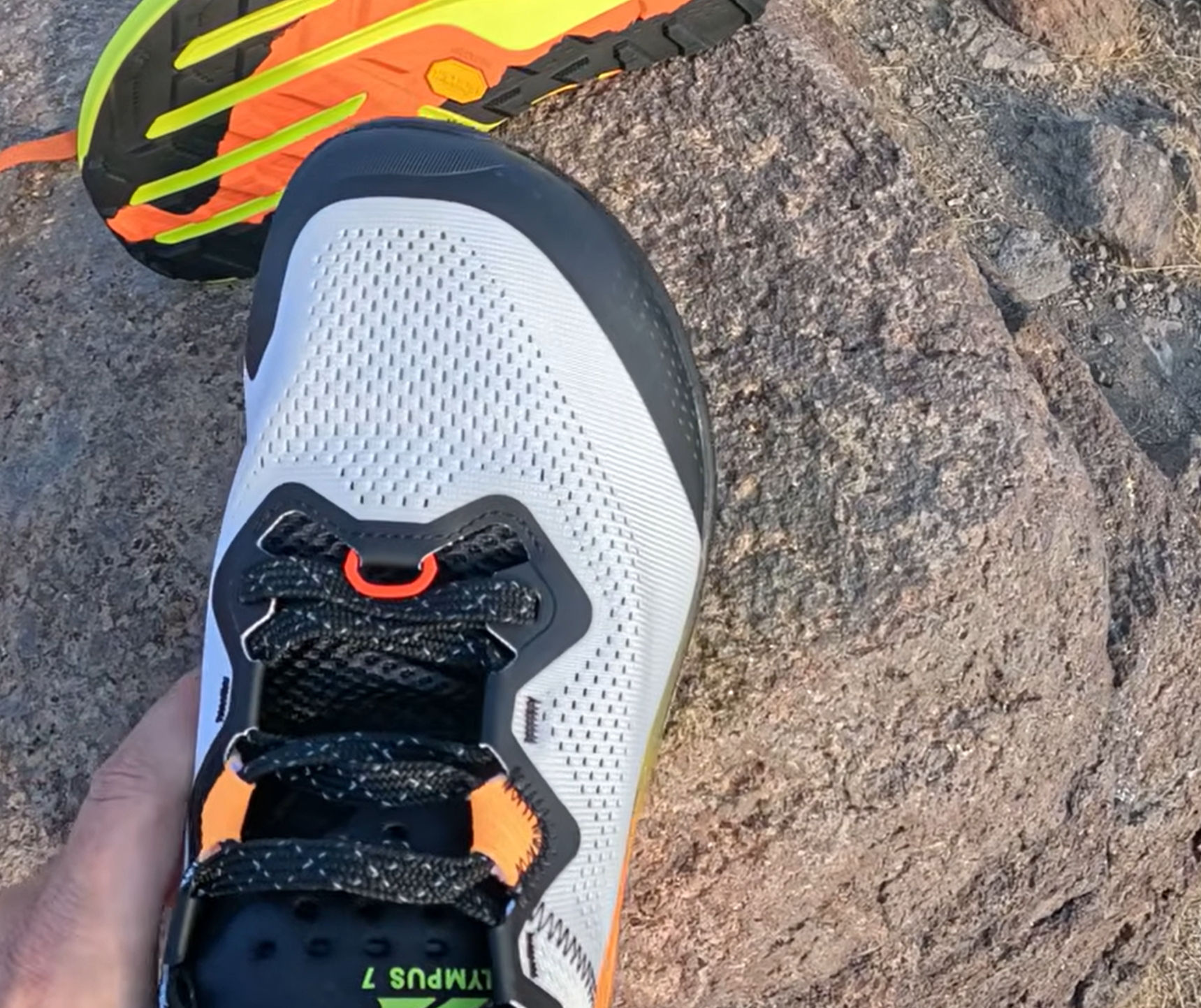
Your toes suddenly have real estate.
That extra space can be especially beneficial during long runs because feet tend to swell as the miles accumulate.
A shoe that feels perfect at mile one can feel considerably less perfect at mile ten if your toes are being compressed.
The Olympus 7 gives your forefoot room to breathe.
For me, that's one of the shoe's biggest strengths.
Is the Altra Olympus 7 Good for Hiking?
Absolutely.
In fact, I think hikers should be paying attention to this shoe.
You don't have to be a runner to benefit from a highly cushioned trail shoe.
If you spend long days hiking, especially on rocky or uneven terrain, the Olympus 7 gives you a combination of cushioning, protection, room, and traction that makes a lot of sense.
And compared with a traditional hiking boot, a trail running shoe like the Olympus 7 can feel considerably lighter and more flexible.
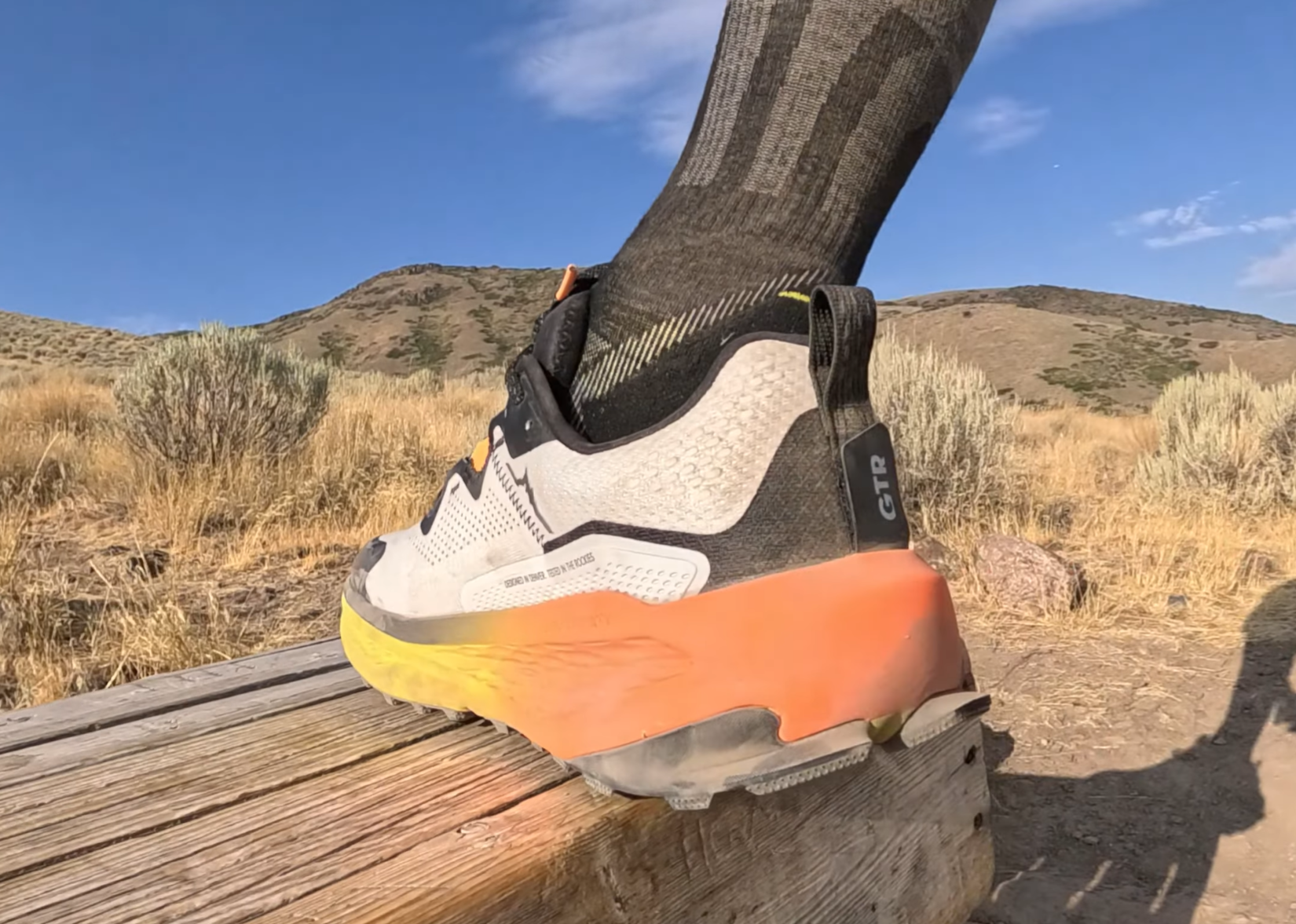
That's especially appealing if you're someone who doesn't necessarily need the structure and ankle coverage of a traditional boot.
For day hikes, long-distance hikes, fastpacking, and extended mountain adventures, the Olympus 7 is a very interesting option.
Where I Think the Olympus 7 Fits Best
If I had to pick the ideal use case for this shoe, I'd say:
Long trail days.
That's where it makes the most sense to me.
Think:
- Long-distance trail runs
- Ultra-distance training
- Hiking
- Fastpacking
- Rocky mountain trails
- High-mileage training
- Long days on your feet
- Technical trails where protection matters
- Runners who prefer maximum cushioning
- Runners who like a roomy toe box
The Olympus 7 isn't necessarily trying to be the fastest shoe in your closet.
It's trying to be the shoe you can still appreciate when you've been out there for several hours.
And honestly, I think that's a pretty good goal.
Who Should Buy the Altra Olympus 7?
I'd take a serious look at the Olympus 7 if you're a trail runner who prioritizes comfort and cushioning.
It's particularly appealing if you:
Want a highly cushioned trail shoe:
The Olympus 7 gives you plenty of cushioning for long days.
Like a roomy toe box:
The FootShape design provides considerably more room for your toes than many traditional running shoes.
Prefer zero-drop shoes:
If you're already comfortable with zero-drop footwear, the Olympus 7 fits right into that philosophy.
Run or hike long distances:
This is where the shoe really starts to shine.
Spend time on rocky trails:
The combination of cushioning and outsole protection makes it a good choice for rough terrain.
Want one shoe that can handle both running and hiking:
The Olympus 7 can comfortably live in both worlds.
Who Might Not Like It?
No shoe is perfect for everyone.
If you prefer an extremely lightweight, minimal, highly responsive trail shoe, the Olympus 7 may feel like overkill.
And if you're not accustomed to zero-drop shoes, you'll need to give your body some time to adapt.
The substantial cushioning can also make the shoe feel more substantial underfoot than some faster trail shoes.
But that's kind of the point.
You don't buy a heavily cushioned trail shoe because you want to feel every pebble beneath your feet.
You buy it because you don't.
Altra Olympus 7 vs. a Lightweight Trail Shoe
This is probably the easiest way to understand the Olympus 7.
Imagine two trail shoes.
One is lightweight, nimble, and responsive. It wants to attack the trail.
The other is cushioned, protective, and comfortable. It wants to keep going.
The Olympus 7 is firmly in the second category.
That's not a criticism.
It's a design philosophy.
And when you're running a long mountain trail in Utah, I don't always need my shoes to scream "GO FASTER!"
Sometimes I need them to say:
"Don't worry. I've got you."
And after a few hours on the trail, that's a pretty nice thing to hear.
My Favorite Thing About the Olympus 7
If I had to narrow it down to one thing, I'd say comfort.
There are a lot of impressive things about this shoe, but the overall comfort is what stands out.
The combination of cushioning, the roomy toe box, zero-drop platform, and protective outsole creates a shoe that feels very well suited to long days outside.
And that's ultimately what I'm looking for in a trail shoe.
I want something that disappears from my mind.
I don't want to spend six hours thinking about my shoes.
I want to spend six hours thinking about the trail.
Or lunch.
Usually lunch.
Final Thoughts
The Altra Olympus 7 is a trail running shoe built around a pretty simple idea:
Give your feet a comfortable place to live while you're out doing ridiculous things in the mountains.
And I think Altra nailed that concept.
The Olympus 7 offers substantial cushioning, a roomy FootShape toe box, zero-drop geometry, and dependable Vibram Megagrip traction.
For long-distance trail running, hiking, and extended days on technical terrain, those are some pretty compelling ingredients.
For me, the Olympus 7 makes the most sense when the goal isn't necessarily to be the fastest person on the trail.
It's about going farther.
It's about staying comfortable.
It's about being able to keep moving when the miles start adding up and your legs begin wondering why you didn't take up something more sensible.
Like golf.
Although knowing me, I'd probably try to trail run the golf course.
That's just how this works.
If you're looking for a high-cushion trail running shoe for long miles, hiking, rocky terrain, and all-day adventures, the Altra Olympus 7 is absolutely worth putting on your list.
And if you're already an Altra fan, the Olympus 7 is a pretty easy shoe to understand.
It's big cushioning.
Big comfort.
Big toe-box energy.
And a whole lot of trail under your feet.
Now if you'll excuse me, there's probably a mountain somewhere that needs to be climbed.
Altra Olympus 7 SEO Keywords
If you're searching for the Altra Olympus 7, here are some of the questions and phrases this review is designed to answer:
- Altra Olympus 7 review
- Altra Olympus 7 trail running shoe
- Altra Olympus 7 hiking shoe
- Altra Olympus 7 review 2026
- Altra Olympus 7 trail shoe
- Altra Olympus 7 zero drop
- Altra Olympus 7 toe box
- Altra Olympus 7 cushioning
- Altra Olympus 7 Vibram Megagrip
- Altra Olympus 7 for hiking
- Altra Olympus 7 for long distance running
- Best Altra trail running shoes
- Best cushioned trail running shoes
- Best trail running shoes for rocky terrain
- Best trail running shoes for hiking
- Altra trail running shoes
Final Rating
Altra Olympus 7: 9/10
Best for: Long trail runs, hiking, ultra-distance training, rocky terrain, and runners who prioritize cushioning and comfort.
The bottom line: If you want a comfortable, highly cushioned trail shoe with a roomy toe box and zero-drop platform, the Altra Olympus 7 is one of the shoes I'd want with me when the trail gets long, rocky, and a little ridiculous.