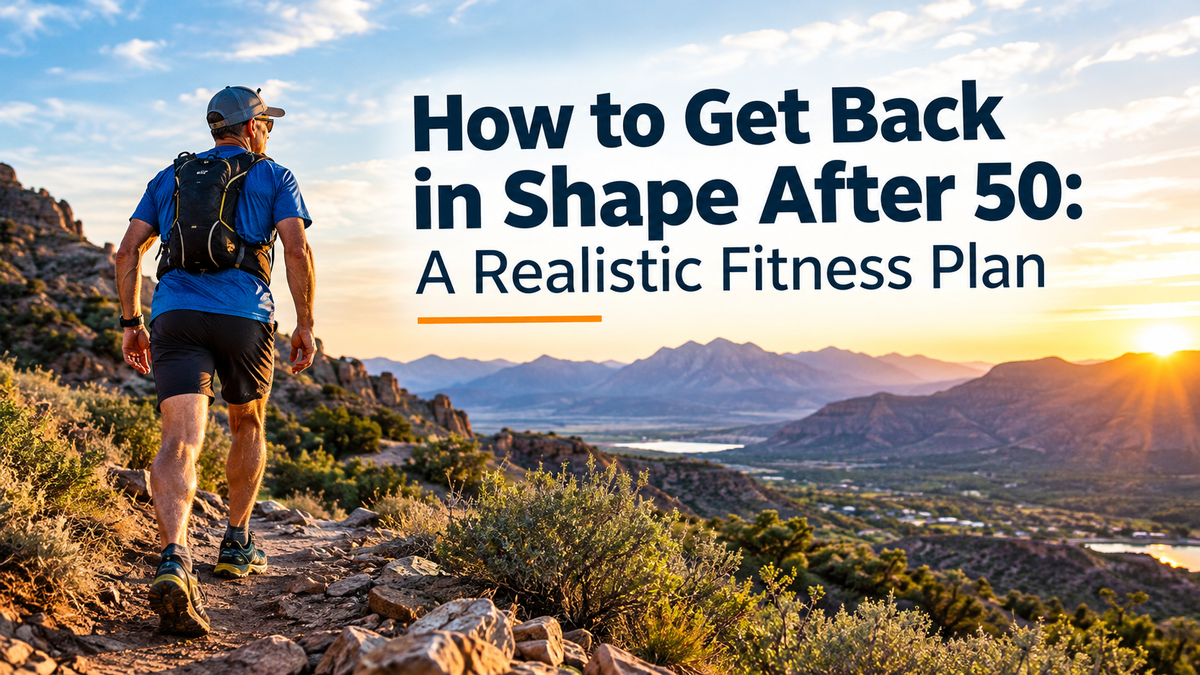
How to Get Back in Shape After 50: A Realistic Fitness Plan

Let's be honest about getting back in shape after 50. It's tough. Really tough.
You don't wake up one morning, put on your old running shoes, and immediately feel like the younger version of yourself. Sometimes you lace up those shoes and wonder if your legs belong to somebody else. Or, it feel like you're running in mud even though the sidewalk and streets are free of any debris.
The stairs seem steeper. Recovery takes a little longer. Muscles you don't remember using suddenly file formal complaints. And that first workout? It has a way of reminding you that thinking about exercise and actually doing exercise are two entirely different activities.
I've spent years running trails, climbing mountains, and chasing experiences that remind me why staying active matters. I love a hard climb, a great view, and the feeling of reaching the top of something that looked questionable from the bottom. There is an amazing feel that comes with finishing a long run or hike that words cannot explain.
But here's something I've learned: Getting fit isn't about winning every workout. It's about building the fitness that allows you to keep doing the things you love.
If you're over 50 and want to get back in shape, you don't need an extreme diet, an expensive gym membership, or a workout program designed by somebody who apparently has 37 hours in every day.
You need a realistic plan.
One that builds strength, improves cardiovascular fitness, fits into your actual life, and allows you to recover between workouts.
Whether you're returning to exercise after several years away, trying to lose some weight, hoping to start running again, or simply wanting more energy for everyday life, this guide will help you get started.
Let's talk about what works, what doesn't, and how to build a fitness routine you can maintain long after the initial motivation wears off.
Why Getting Back in Shape After 50 Is Different
First, let's get something straight: Turning 50 doesn't mean your opportunity to get stronger, improve endurance, or enjoy physical challenges has expired.
You can make meaningful fitness improvements later in life. The approach, however, should account for where you are today rather than where you think you should be.
As we age, several things can change.
Muscle strength and muscle mass
Adults can gradually lose muscle mass and strength with age, particularly when physical activity and resistance training are limited. This process is often called age-related muscle loss.
The good news is that strength training can help build and maintain muscle at many ages.
You don't need to become a bodybuilder. Building enough strength to climb stairs comfortably, carry groceries, hike uphill, and get up from the floor is a worthwhile goal.
And if you enjoy trail running, stronger legs and hips can help you handle the physical demands of climbing and descending.
Recovery may require more attention
You might find that you can't jump from one demanding workout to another as easily as you once could. This has definitely been my experience.
Recovery varies considerably between individuals, but sleep, nutrition, training intensity, stress, and overall health all influence how well you bounce back.
The solution isn't to stop exercising. It's to manage your training intelligently.
You don't need to turn every workout into a personal challenge. Easy days have a purpose, and rest days aren't a sign of weakness.
They're part of the plan.
Your starting point matters more than your age
A healthy, active 58-year-old who walks daily has a very different starting point from a 52-year-old who has spent the past five years sitting at a desk and avoiding exercise.
Neither person needs to compare themselves with the other.
Your current fitness, previous injuries, medical history, available time, and personal goals should guide your approach.
The most important rule is to start where you are, not where you wish you were.
You can build from there.
Step 1: Define What Getting in Shape Actually Means
Before you start buying workout gear or planning an ambitious exercise schedule, decide what you want to accomplish.
"Getting in shape" is a useful phrase, but it can mean several different things.
Perhaps you want to:
- Lose excess body fat.
- Build muscle and become stronger.
- Improve cardiovascular endurance.
- Walk uphill without feeling completely exhausted.
- Return to running or hiking.
- Improve balance and mobility.
- Have more energy for work, family, and outdoor activities.
- Maintain independence and physical capability as you get older.
Your goals will influence the type of exercise you prioritize.
If you want to build strength, resistance training deserves a regular place in your schedule. If your goal is to improve endurance, walking, cycling, swimming, or running may be important. If you want to become a more capable hiker, you'll benefit from a combination of aerobic exercise, leg strength, and balance work.
You don't have to choose only one.
In fact, a balanced fitness routine usually includes several types of activity.
I like goals that connect fitness to something meaningful. Rather than focusing exclusively on a number on a scale, think about what you want your body to help you do.
Maybe it's hiking to an alpine lake, running a local trail, keeping up with your family on vacation, or simply feeling more capable during everyday activities.
Those are goals worth working toward.
Step 2: Start With Walking
If you've been inactive for a while, walking is one of the simplest ways to begin rebuilding your fitness.
You don't need special equipment beyond comfortable footwear, and you can adjust the duration and pace to your current ability.
Walking also gives you a chance to establish a consistent exercise habit before adding more demanding workouts.
How much should you walk?
If you're starting from a very low activity level, begin with 10 to 15 minutes at a comfortable pace, provided that feels manageable for you.
If that's too much, start with five minutes. There's no prize for making your first workout unnecessarily difficult.
Try walking three to five days per week, adjusting the duration according to how you feel and recover.
As your fitness improves, gradually increase the length of some walks.
For example, you might progress from 10 minutes to 15 minutes, then 20 minutes, and eventually 30 minutes or more.
These aren't deadlines. They're examples of how to build up gradually.
If you're already comfortable walking for 30 minutes, you don't need to begin at five minutes simply because you're over 50.
Start at a level that challenges you appropriately without leaving you exhausted.

Add hills when you're ready
Walking on hills can increase the physical demands of a workout without requiring you to run.
For trail enthusiasts, this is especially useful. Uphill walking develops aerobic endurance and challenges the muscles involved in climbing.
Start with gentle inclines before progressing to steeper hills.
Here in Utah, it's tempting to head straight for a mountain trail with a spectacular view. We have plenty of those.
But you don't have to conquer a mountain on your first day back.
Build your fitness on manageable terrain, then gradually work toward the climbs you want to tackle.
Consistency beats occasional heroics. A manageable walk you repeat regularly is more useful than an epic workout that leaves you unable to exercise for the next week.
Step 3: Build Your Cardiovascular Fitness
Walking is a great starting point, but cardiovascular fitness can be developed through several types of aerobic exercise.
Depending on your preferences and physical abilities, options include:
- Brisk walking.
- Hiking.
- Cycling.
- Swimming.
- Elliptical training.
- Easy running.
- Low-impact aerobic workouts.
The best choice is an activity you enjoy enough to repeat.
If you love being outdoors, walking or hiking might be a natural fit. If your joints don't tolerate running well, cycling or swimming may be more comfortable options.
You don't need to run to be fit.
As a runner, I enjoy the challenge of moving across trails and climbing mountains. But running isn't the only way to develop endurance, and it's certainly not a requirement for building a healthy fitness routine.
Use the talk test
One simple way to judge aerobic intensity is the talk test.
During moderate-intensity exercise, you should generally be able to talk in sentences, although singing would be difficult.
If you're gasping after every few words, you're probably working harder than necessary for a moderate session.
If you're completely comfortable carrying on an animated conversation without any change in breathing, you may be exercising at a relatively easy intensity.
Both easy and more challenging workouts can have a place in a fitness program. The key is knowing which type you're doing and avoiding the temptation to make every session hard.
How much cardio should you aim for?
For adults, public health guidelines generally recommend working toward at least 150 minutes of moderate-intensity aerobic activity per week, or an equivalent amount of vigorous activity.
That recommendation is a destination, not a starting requirement.
If you've been inactive, begin with less and gradually build toward a sustainable amount.
You can divide your activity across the week. For example, 30 minutes of moderate exercise on five days would add up to 150 minutes.
Shorter sessions also count toward your total activity. You don't need to complete every workout in one uninterrupted block.
The important thing is to establish a routine that fits your current fitness and allows you to progress safely.
Step 4: Start Strength Training Twice a Week
If I could encourage someone over 50 to add one thing to a fitness routine dominated by walking or cardio, it would be strength training.
You don't need to lift enormous weights or spend hours in a gym. A few well-chosen exercises performed consistently can help you develop and maintain strength.
Strength training becomes especially valuable when your goal is to remain physically capable as you age.
It can help support everyday tasks, including carrying objects, climbing stairs, getting up from chairs, and managing uneven terrain.
A beginner-friendly strength routine
Start with one or two sets of the following exercises, using a variation that feels manageable and allows you to maintain good technique.
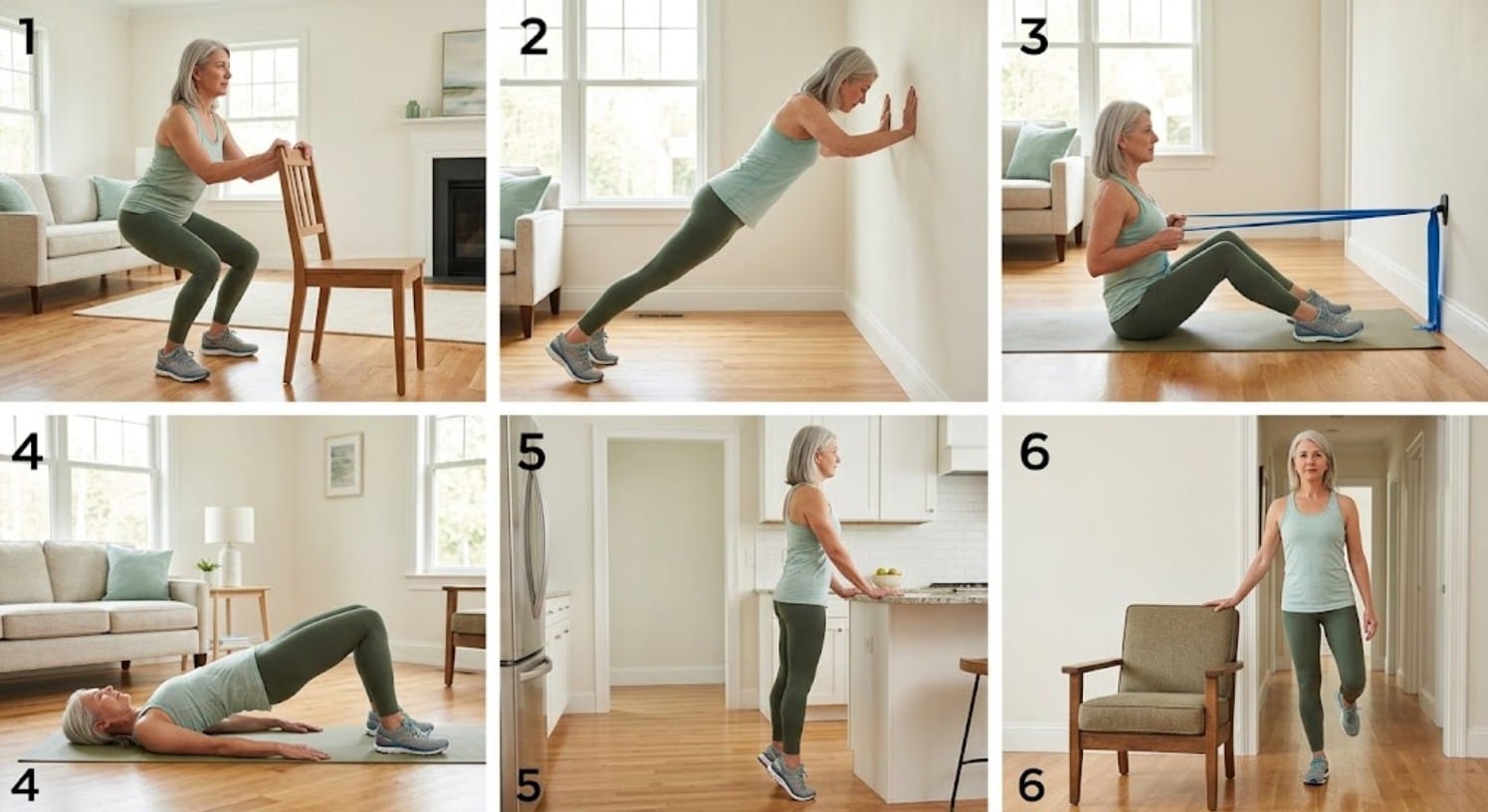
1. Chair squats
Stand in front of a sturdy chair. Slowly lower yourself toward the seat, then stand back up.
Use your hands for assistance if needed.
Chair squats help develop the muscles used when sitting down and standing up.
2. Wall push-ups
Stand facing a wall, place your hands against it, and slowly bend your elbows to bring your chest closer to the wall. Push back to the starting position.
As you become stronger, you can progress to a countertop or another stable incline.
3. Resistance-band rows
Secure a suitable resistance band according to its instructions. Pull the band toward your torso while keeping your shoulders controlled.
This exercise works muscles in the upper back and arms.
4. Glute bridges
Lie on your back with your knees bent and feet flat on the floor. Gently lift your hips, then lower them under control.
Skip this exercise if getting onto or off the floor is difficult or uncomfortable; a standing alternative may be more appropriate.
5. Calf raises
Hold a sturdy support and slowly rise onto the balls of your feet before lowering your heels.
These work the calf muscles, which contribute to walking and running.
6. Supported single-leg balance
Stand beside a stable support and practice shifting your weight onto one leg while keeping a hand nearby for assistance.
Start with a few seconds at a time. The goal is controlled balance, not a dramatic demonstration of athletic ability.
How often should you strength train?
Two nonconsecutive days per week is a practical starting point for many adults.
Begin with a manageable number of repetitions and stop when your technique starts to deteriorate. As the exercises become easier, you can gradually increase repetitions, resistance, or difficulty.
You don't need to reach exhaustion to benefit.
If you're new to strength training, have significant joint limitations, or aren't sure how to perform an exercise, consider getting guidance from a qualified trainer or physical therapist.
If you have a health condition that affects exercise, seek advice about appropriate modifications.
The goal isn't to prove how much you can lift on your first day.
The goal is to become a little stronger over time.
Step 5: Don't Forget Mobility and Balance
Cardio and strength training deserve most of the attention in a beginner fitness plan, but mobility and balance work can also be useful.
Mobility refers to your ability to move your joints through the ranges needed for everyday activities. Balance helps you control your body while standing and moving.
Both are relevant to hiking, trail running, and ordinary life.
Consider adding five to ten minutes of simple movements to your routine:
- Gentle ankle movements.
- Controlled hip mobility exercises.
- Comfortable shoulder circles.
- Supported balance practice.
- Gentle stretching after exercise, if it feels helpful.
You don't need a complicated mobility program with 27 exercises and a name that sounds like a Scandinavian furniture collection.
Start with movements that address your needs.
If you spend much of the day sitting, gentle movement breaks may help you feel less stiff. If you're preparing for hiking, balance and ankle control deserve attention.
Avoid forcing a joint into a painful position. Mobility work should be controlled and appropriate to your current abilities.
Step 6: Follow a Realistic Weekly Fitness Plan
Now let's put the pieces together.
The following schedule is an example for someone who can already manage short walks and basic exercises without concerning symptoms. If you're starting from a much lower activity level, reduce the duration and build up gradually.
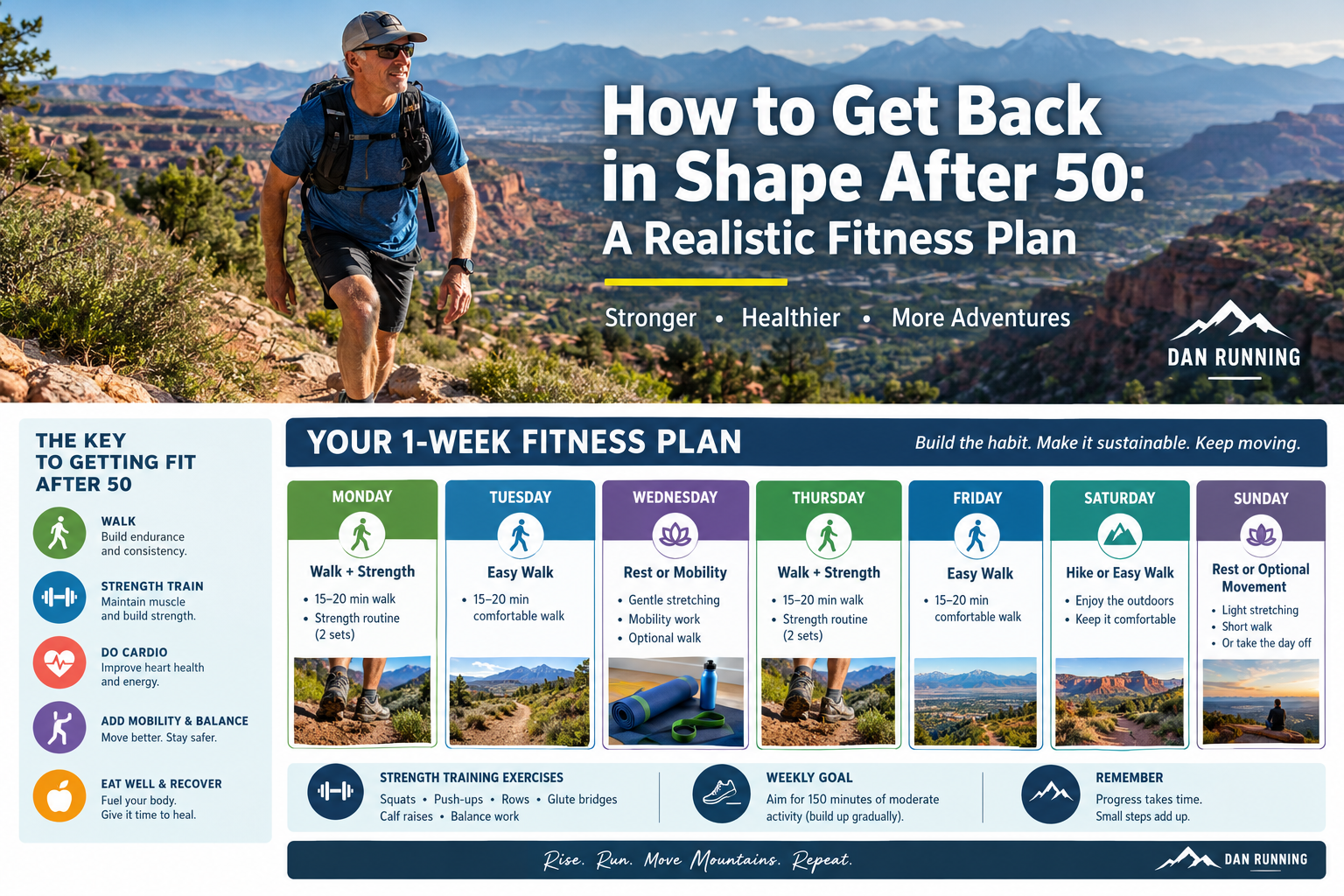
Your first-week fitness schedule
| Day | Activity | Goal |
|---|---|---|
| Monday | 15–20 minute walk + strength routine | Build a foundation |
| Tuesday | 15–20 minute comfortable walk | Easy aerobic activity |
| Wednesday | Rest or gentle mobility | Recover |
| Thursday | 15–20 minute walk + strength routine | Build strength and endurance |
| Friday | 15–20 minute comfortable walk | Stay consistent |
| Saturday | Easy walk or gentle hike | Enjoy moving outdoors |
| Sunday | Rest or optional easy movement | Prepare for the next week |
Adjust the schedule to fit your needs. If two strength sessions leave you feeling excessively sore, reduce the initial workload. If your current fitness is higher, you can start with longer sessions.
This schedule is a starting framework, not a test you have to pass.
How to progress over the first month
Week 1: Establish the habit.
This is the MOST IMPORTANT STEP - and the HARDEST!! Focus on showing up. Keep your walks comfortable and learn the strength exercises.
Week 2: Repeat what worked.
If the first week felt manageable and you recovered well, add a few minutes to one or two walks or increase repetitions slightly.
Week 3: Build gradually.
Continue with your established routine. You might add a gentle hill or a little resistance to a strength exercise.
Week 4: Review and adjust.
Look at how consistently you exercised, how you recovered, and which activities you enjoyed.
You don't need to increase every workout every week. Sometimes the best progression is simply repeating the same routine until it feels easier.
If you experience unusual fatigue, persistent pain, or a decline in how you feel, reassess the workload rather than forcing yourself to progress.
Fitness is built over months and years. Four weeks is an opportunity to establish a foundation, not a deadline for transforming your body.
Step 7: Eat to Support Your Fitness Goals
Exercise matters, but nutrition influences how well you recover and how sustainable your routine feels.
You don't need to adopt an extreme diet to get back in shape.
Start with a few practical habits.
Include protein regularly
Protein provides the building blocks your body uses to repair and maintain muscle.
Include protein-rich foods in your meals, such as eggs, fish, chicken, Greek yogurt, beans, lentils, tofu, or other foods that fit your preferences.
People's protein needs vary with body size, activity, health, and other factors. If you have kidney disease or another condition that affects dietary protein, ask your healthcare professional about an appropriate intake.
Eat a balanced diet
Aim to build meals around a variety of foods, including:
- Protein sources.
- Vegetables.
- Fruits, if you enjoy them.
- Whole grains or other fiber-rich carbohydrates.
- Healthy sources of dietary fat.
Carbohydrates can be particularly useful for fueling walking, hiking, and other aerobic activities. You don't need to eliminate them to become fitter.
Likewise, you don't have to ban every food you enjoy.
A sustainable eating pattern is usually more useful than a short-term diet that leaves you constantly hungry and eager to quit.
Stay hydrated
Drink fluids regularly throughout the day and pay attention to hydration during exercise, especially in hot or dry conditions.
Utah's dry climate can make it easy to underestimate fluid needs, particularly during outdoor activity.
Your needs will vary with temperature, workout duration, and how much you sweat.
For longer or hotter workouts, plan ahead rather than waiting until you're very thirsty.
If weight loss is a goal, be patient
Losing body fat generally requires a sustained energy deficit, but aggressive restriction can make exercise harder to maintain and may compromise nutrition.
Combine appropriate nutrition with regular movement and strength training.
Avoid judging your progress entirely by daily scale readings. Body weight naturally fluctuates, and improvements in fitness may occur even when the scale changes slowly.
Focus on habits you can sustain.
Step 8: Treat Recovery as Part of the Plan
It's easy to get excited about a new fitness routine and try to do everything at once.
You start walking every day, add strength training, cut calories, and decide you're going to become a completely different person by next Tuesday.
Then your legs hurt, you're exhausted, and the new workout shoes are sitting by the door looking at you with disappointment.
Let's avoid that.
Recovery is an essential part of a sustainable fitness routine.
Get enough sleep
Most adults should aim for at least seven hours of sleep per night, although individual needs vary.
A consistent sleep schedule and a comfortable sleeping environment can help support recovery.
If you consistently feel exhausted despite getting adequate sleep, consider whether your workload, sleep quality, or health needs further attention.
Leave room between hard workouts
You don't need to perform demanding strength sessions on consecutive days when you're just starting out.
Alternate harder sessions with easier activity or rest. Pay attention to how your muscles feel and whether you're ready for the next workout.
Some mild muscle soreness can occur after unfamiliar exercise. Sharp pain, worsening pain, or symptoms that interfere with normal movement shouldn't be treated as a badge of honor.
Learn the difference between discomfort and warning signs
Exercise can feel challenging without being dangerous. Breathing faster during a brisk walk, for example, is a normal response to increased effort.
However, chest pain, fainting, severe or unusual shortness of breath, or palpitations accompanied by dizziness or weakness warrant stopping exercise and seeking appropriate medical evaluation. Severe or persistent symptoms may require emergency care.
If you have been inactive for a long time, have significant health conditions, or are planning vigorous exercise, consult a healthcare professional about how to begin safely.
You don't need to be afraid of exercise. You do need to respect your body's signals.
Step 9: Track Progress Beyond the Scale
When people talk about getting in shape, weight often becomes the only measure of success.
That's a mistake.
Weight can be one useful measure if fat loss is your goal, but it doesn't capture everything that changes when you exercise consistently.
Pay attention to other indicators of progress.
Your walks become easier
Perhaps you can walk for 25 minutes instead of 15. Maybe you can handle a gentle hill without needing to slow down as much.
These are meaningful improvements in your ability to sustain activity.
Everyday tasks feel more manageable
Carrying groceries, climbing stairs, or getting up from a chair may feel easier as your strength and endurance improve.
Those benefits matter even if you never run a race.
You become stronger
You might perform more chair squats, use a stronger resistance band, or complete a strength routine with better control.
Record your exercises and repetitions so you can recognize progress.
You recover more comfortably
Over time, you may find that your usual workouts feel more manageable and that you can maintain your routine with less disruption.
Recovery isn't identical every day, but noticing patterns can help you adjust training intelligently.
You become more consistent
Perhaps the biggest victory is that exercise becomes part of your normal week.
You no longer need a motivational speech to go for a walk. You simply put on your shoes and go.
That's a habit worth building.
Step 10: Make Fitness Something You Enjoy
Here's my advice as someone who loves running trails and spending time outdoors: Find an activity that gives you a reason to keep going.
Fitness doesn't have to mean staring at a gym wall while counting repetitions and wondering whether time has stopped.
It can mean exploring a new trail, watching the sunrise during a walk, riding a bike, swimming, hiking with friends, or challenging yourself to reach a viewpoint you've never visited.
When exercise becomes connected to experiences you enjoy, it can feel less like an obligation.
If you love the outdoors, start with walks in places that interest you. Gradually explore longer routes or gentle hills as your fitness improves.
If you prefer the gym, build a routine around exercises you find useful and satisfying.
If you enjoy being social, schedule walks with a friend.
And if you prefer exercising alone, that's fine too.
You don't need to post every workout online, buy a smartwatch that can probably launch a satellite, or turn your exercise routine into a second job.
You just need a reason to keep moving.
Don't let an imperfect week derail you
Life gets in the way.
Work gets busy. Family needs your attention. Travel disrupts your schedule. Sometimes you simply don't feel like exercising.
Missing a workout doesn't erase your progress.
If you miss several days, return to your routine at a manageable level rather than trying to make up for every missed session.
Consistency doesn't mean never missing a day.
It means returning to the habit after life interrupts it.
That's a much more realistic definition of success.
Common Mistakes to Avoid When Getting Fit After 50
Before you start, watch out for a few common traps.
Doing too much too soon. Increasing workout duration, intensity, and frequency all at once can make the transition unnecessarily difficult. Build gradually.
Ignoring strength training. Walking is excellent, but a balanced fitness routine should also include resistance exercise if you're able to perform it safely.
Making every workout hard. Easy sessions help you accumulate activity without constantly pushing your limits.
Expecting rapid results. Fitness adaptations take time. Focus on consistency rather than dramatic changes over a few days.
Comparing yourself with your younger self. Your previous fitness can be useful context, but your current starting point should guide your training.
Buying gear instead of building habits. Good shoes and useful equipment can help, but they cannot exercise on your behalf. Unfortunately, the running shoe industry has yet to solve that problem.
Quitting because of one bad week. Progress isn't perfectly linear. Adjust your routine and continue when you're ready.
The goal is not to execute a perfect fitness plan. It's to develop a sustainable one.
Frequently Asked Questions
Can you get back in shape after 50?
Yes. People can improve strength, cardiovascular fitness, balance, and exercise capacity after 50. The amount and pace of progress depend on factors such as starting fitness, health, training consistency, and recovery.
How long does it take to get back in shape after 50?
There is no universal timeline. Some people notice that familiar activities feel easier within a few weeks, while more substantial changes in endurance, strength, or body composition may take months. Start with realistic expectations and evaluate progress over time.
What is the best exercise for beginners over 50?
Walking is a practical starting point for many people because it's accessible and easy to adjust. A well-rounded routine also includes strength training, and may include balance and mobility exercises. The best starting activity depends on your abilities, health, and goals.
How many days a week should a 50-year-old exercise?
A reasonable goal is to build toward regular aerobic activity throughout the week and strength training on at least two days. Beginners can start with fewer or shorter sessions and gradually increase their activity as their fitness improves.
Is walking enough to get in shape after 50?
Walking can improve aerobic fitness and contribute to overall health. However, walking alone may not provide enough resistance to develop all the strength needed for a balanced routine. Adding strength training and, where appropriate, balance exercises can make your program more comprehensive.
Should you run after 50?
Age alone does not rule out running. Your current fitness, health, previous injuries, and comfort with impact should guide the decision. If you're returning to running after a long break, begin with manageable walk-run intervals or seek professional guidance when needed.
Can you build muscle after 50?
Yes. Strength training can help adults build and maintain muscle later in life. Start with manageable resistance, use controlled technique, and gradually increase the challenge as you become stronger.
Is it too late to start exercising at 60 or 70?
No. Physical activity can be beneficial at many ages. The routine should reflect your current abilities, health, and goals. If balance, mobility, or medical conditions affect your exercise options, a healthcare professional or qualified exercise specialist can help you identify suitable activities.
Do you need a gym to get fit after 50?
No. Walking, bodyweight exercises, resistance bands, and appropriately selected home workouts can provide a useful starting point. A gym is an option, not a requirement.
What if you feel too tired to exercise?
Start by considering whether the planned workout is too demanding. A shorter, easier session may be more manageable. However, persistent or unexplained fatigue deserves attention rather than simply being pushed through. Consider discussing it with a healthcare professional, particularly if it is new or worsening.
Final Thoughts: You're Not Too Old, and You Don't Need to Prove Anything
Getting back in shape after 50 isn't about trying to recreate every detail of your younger years.
It's about building the strength, endurance, and confidence to enjoy the years ahead.
Start walking. Add strength training. Improve your cardiovascular fitness gradually. Eat in a way that supports your goals. Get enough sleep, allow time to recover, and track progress that goes beyond the number on a scale.
Most importantly, be patient with yourself.
You don't have to go from the couch to the summit in a month. You don't have to run a marathon to prove you're fit. And you don't need to make every workout so difficult that you'll spend the next three days negotiating with your own legs.
You need to keep showing up.
Some days will feel great. Other days will feel like your body has requested a meeting with management. Both are part of the process.
If you're willing to start small, make sensible adjustments, and stay consistent, you can build a fitness routine that supports the life you want to live.
For me, that means continuing to explore trails, climb mountains, enjoy the views, and pursue experiences that challenge me physically and mentally.
Your goal might look different. That's the beauty of it.
Choose something meaningful. Take the first step. Then take another.
You don't have to be the fastest person on the trail. You don't have to lift the heaviest weights in the gym. You just have to keep moving in the right direction.
You're not finished. You're just getting started.
Rise. Run. Move Mountains. Repeat.